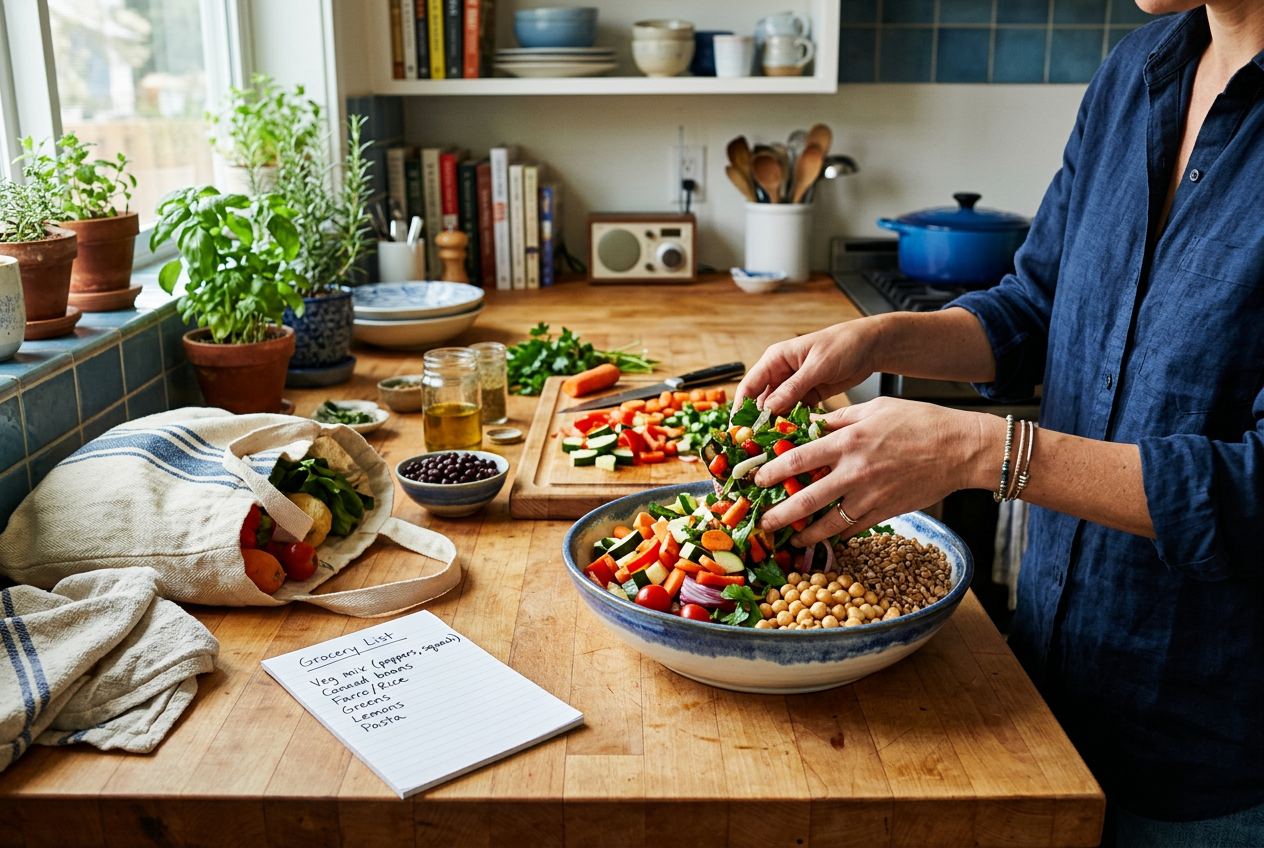
Meal planning can be as simple as deciding what to cook on three evenings and keeping a few easy options for the rest. The goal is not a perfect menu; it is fewer last-minute decisions and a better chance of using food you already bought.
Take inventory before you shop
Spend a few minutes checking the refrigerator, freezer, and pantry. Note ingredients that should be used soon, such as opened produce or leftovers. Planning around those items can help reduce duplicate purchases and food waste.
Check your calendar too. A night with a late appointment may call for leftovers or a quick meal, while a quieter evening may be a better time to cook a larger batch.
Plan building blocks, not seven complicated recipes
Choose a handful of meals and repeat ingredients where it makes sense. For example, roast vegetables once and use them in a grain bowl, a soup, or alongside eggs. Keep a backup meal made from shelf-stable or frozen foods for days when plans change.
A flexible plate can include vegetables or fruit, a protein source, and a grain or other satisfying staple. Your needs, budget, culture, and health conditions are individual, so use this as a planning prompt—not a prescription or a weight-loss plan.
- Pick two or three meals everyone at home already likes.
- Choose one versatile ingredient that can work in more than one meal.
- Write down the items you need, then check the list against what is already at home.
Keep the shopping list useful
Group items by where you usually find them—produce, pantry, dairy, frozen—to make the trip easier. If you shop online, compare the final cart with your plan and check package sizes and delivery fees before placing the order.
If cost is a concern, compare unit prices, store brands, seasonal produce, and frozen or canned options. Nutrition and budget advice should account for what is accessible to you; no single shopping list works for every household.
Store food safely and leave room for change
Refrigerate perishable foods promptly, keep raw meat separate from foods that will be eaten without cooking, and use a food thermometer when guidance calls for one. The USDA Food Safety and Inspection Service provides current storage and temperature advice.
A meal plan is a tool, not a rule. Swap days, freeze portions you will not use soon, and keep one open slot for leftovers or an unexpected invitation.
Sources & further reading
We used these public resources when preparing this guide. Open the source for its full, current guidance.